
Moving Wildlife with Purpose
Posted on Sun May 24, 2026.
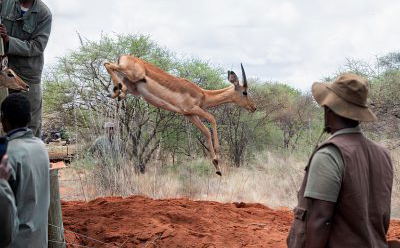
At Limpopo-Lipadi, conservation is not just about protecting what is here, it’s about actively shaping a balanced, resilient ecosystem. One of the ways we do this, from time to time, is through carefully managed game releases or relocations. These operations help manage the impact on our veld, support robust populations, strengthen genetic diversity, and ensure that all parts of the Reserve remain productive habitats for the wildlife that calls them home.
Recently, our team assisted in relocating impala and kudu, two species that play a vital role in the Reserve’s ecology. While the process is highly technical behind the scenes, the guiding principle is simple: move animals safely and calmly to areas where they will thrive.
Modern game capture techniques have their roots in the 1960s, when conservation pioneer Jan Oelofse of the former Natal Parks Board developed the first practical mass-capture system. Today, the process still follows the principles he established.
Capture operations typically begin the day before, with the team selecting and preparing the ideal site based on terrain, vegetation, and prevailing wind direction. From the air, the capture boma is positioned and refined.
When the operation begins, an experienced wildlife helicopter pilot gently guides the selected animals toward the boma. Long curtains, suspended from a high cable, form a wide funnel on the ground that gradually narrows over nearly two kilometres. This design guides the animals calmly and naturally into a secure holding area, reducing stress and avoiding confusion.
Once inside the system, the animals move through a series of connected compartments in multiple transport trucks, where they are separated by species and by males and females. Each compartment links smoothly to the next, creating a continuous passage. Wildlife professionals oversee every step, ensuring the animals remain calm and uninjured.
Share This Post